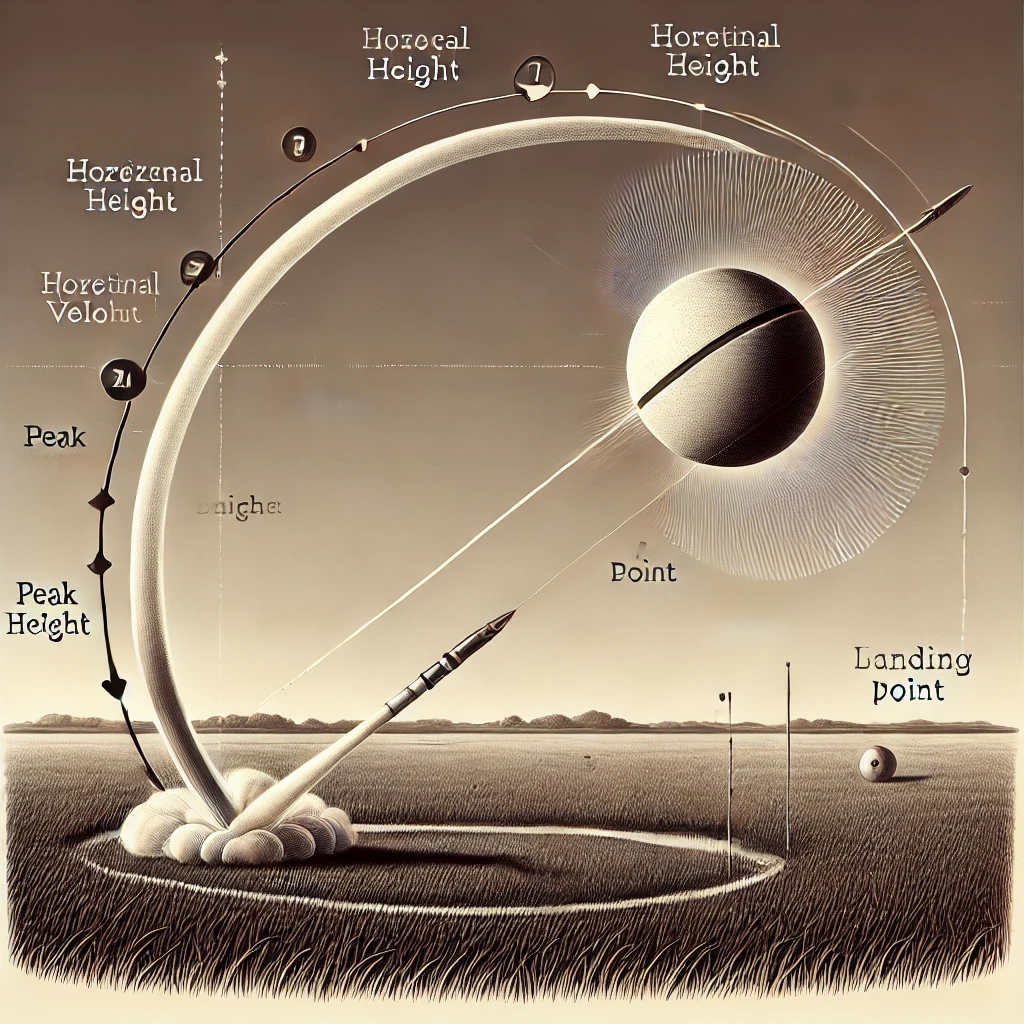
Projectile motion refers to the motion of an object thrown or projected into the air, subject to only the acceleration due to gravity. It follows a curved path called a parabola, and is influenced by two key components of motion:
Horizontal motion: The velocity in the horizontal direction is constant, as no external forces act on the object horizontally (assuming no air resistance).
Vertical motion: The velocity in the vertical direction is affected by gravity, causing the object to accelerate downward at 9.8 m/s² (on Earth).
The object moves horizontally with constant velocity, and vertically with constant acceleration due to gravity. These motions combine to produce a curved trajectory.
Key equations for projectile motion include:
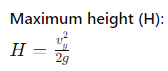
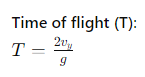
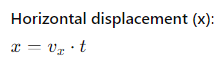
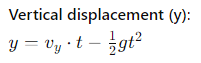
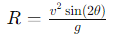
- g is the acceleration due to gravity.
- t is time.
- vx is the horizontal velocity component.
- vy is the vertical velocity component.
- v is the initial velocity amd θ is the launch angle.


Leave a Reply