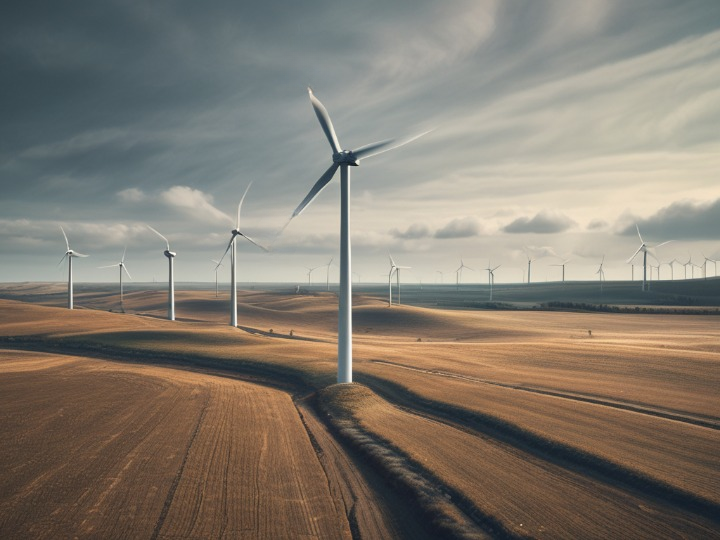
Wind energy technology has evolved significantly, becoming one of the most efficient and sustainable forms of renewable energy. Here’s an overview of its key aspects:
-
Onshore Wind Farms: Installed on land. They are typically easier and cheaper to install and maintain but can face limitations due to space and proximity to populated areas.
-
Offshore Wind Farms: Located in bodies of water. They benefit from stronger and more consistent winds but are more expensive to install and maintain.
Advancements in Technology
-
Larger Turbines: Modern turbines are significantly larger, with longer blades and taller towers, which increases their efficiency and power output.
-
Floating Wind Turbines: These are designed for deep-water locations where traditional offshore turbines cannot be anchored to the seabed.
-
Advanced Materials: The use of lightweight and durable materials, such as carbon fiber and composites, enhances the performance and lifespan of wind turbine components.
-
Smart Sensors and IoT: Integration of sensors and Internet of Things (IoT) technology for real-time monitoring and maintenance, which improves reliability and reduces downtime.
-
Energy Storage Solutions: Integration with battery storage systems to store excess energy and ensure a stable supply.
Benefits of Wind Energy
- Renewable and Sustainable: Wind is a natural and inexhaustible resource.
- Low Operating Costs: Once installed, wind turbines have relatively low operational and maintenance costs.
- Environmental Impact: Wind energy generates electricity without emitting greenhouse gases or pollutants.
Challenges
- Intermittency: Wind is variable and not always available, which can affect the reliability of energy supply.
- Noise and Visual Impact: Turbines can be noisy and affect the landscape, leading to opposition from local communities.
- Wildlife Impact: Wind farms can pose risks to birds and bats, requiring careful siting and design to mitigate these impacts.
Future Trends
- Artificial Intelligence and Machine Learning: Optimizing turbine performance and predictive maintenance through advanced AI and Machine.
- Repowering: Upgrading older turbines with newer, more efficient technology to increase energy output.
- Hybrid Systems: Combining wind with other renewable energy sources, such as solar, to provide a more consistent energy supply.
Wind energy technology continues to advance, making it an increasingly important component of the global energy mix, contributing to efforts to combat climate change and reduce dependence on fossil fuels.


Leave a Reply