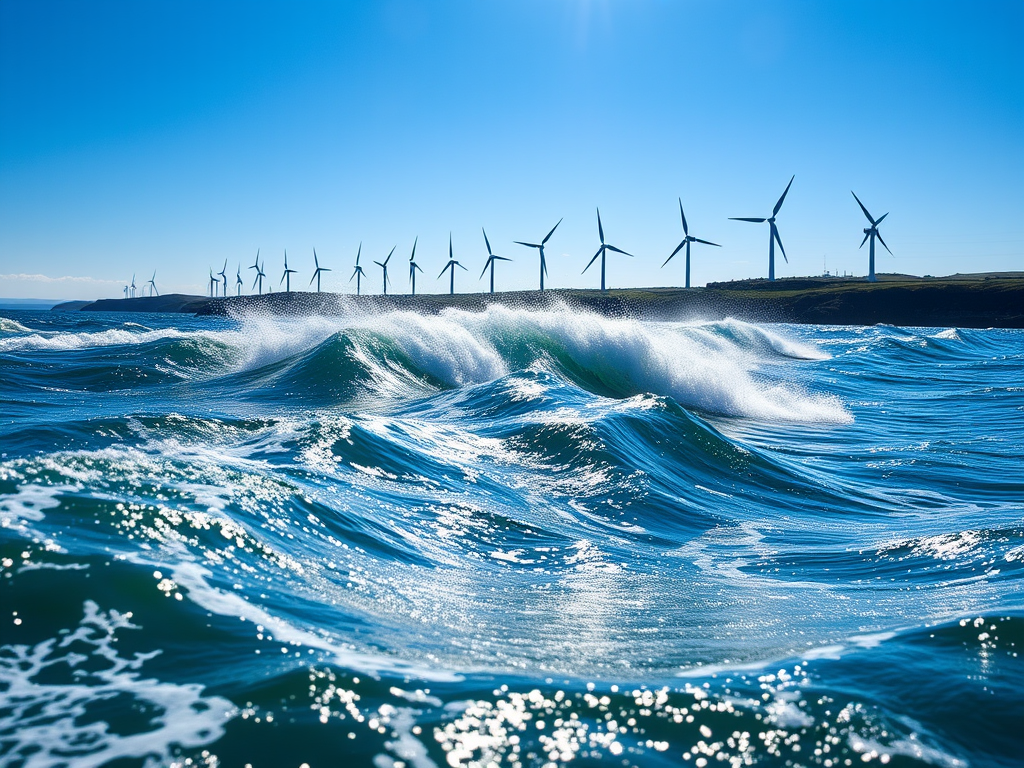
Tidal energy, derived from the gravitational forces of the moon and the sun on the Earth’s oceans, holds immense promise as a renewable energy source. Here’s an overview of its methods, benefits, and challenges:
Methods :
- Tidal Stream Systems: These systems harness kinetic energy from the flow of water caused by tides. Underwater turbines are placed in tidal streams to capture the energy generated by the moving water.
- Tidal Barrages: These are large dams built across estuaries or tidal basins. They feature sluice gates that allow water to flow in and out of the basin during tidal cycles. The potential energy generated from the height difference between the water levels inside and outside the basin is then converted into electricity using turbines.
- Tidal Lagoons: Similar to tidal barrages, tidal lagoons involve constructing walls or embankments to enclose a tidal area, creating a lagoon. Turbines installed in the lagoon generate electricity as water flows in and out with the tides.
Benefits :
- Renewable and Predictable: Tidal energy is renewable, as tidal cycles are predictable and occur twice daily. This predictability makes tidal energy a reliable source of electricity.
- Low Carbon Emissions: Tidal energy production produces minimal greenhouse gas emissions, making it an environmentally friendly alternative to fossil fuels.
- High Energy Density: Tidal energy has a high energy density compared to other renewable sources like wind and solar, making it potentially more efficient in terms of power generation per unit area.
- Long Lifespan: Tidal energy infrastructure, such as turbines and barrages, typically has a long operational lifespan, contributing to its sustainability as an energy source.
Challenges :
- High Initial Costs: The construction of tidal energy infrastructure, such as barrages and turbines, can be expensive. This initial investment can be a barrier to widespread adoption.
- Environmental Impact: Tidal energy projects can disrupt marine ecosystems, affecting fish migration patterns and the habitats of marine species. Careful planning and environmental impact assessments are necessary to minimize these effects.
- Limited Locations: Tidal energy generation is feasible only in locations with strong tidal currents or large tidal ranges. This limits the potential for widespread deployment compared to other renewable energy sources like wind and solar.
- Maintenance Challenges: Tidal energy systems are exposed to harsh marine environments, which can pose challenges for maintenance and repair, increasing operational costs.
Exploring and addressing these challenges is crucial for unlocking the full potential of tidal energy as a sustainable and reliable source of electricity. As technology advances and costs decrease, tidal energy may play an increasingly significant role in the global transition to clean energy.
