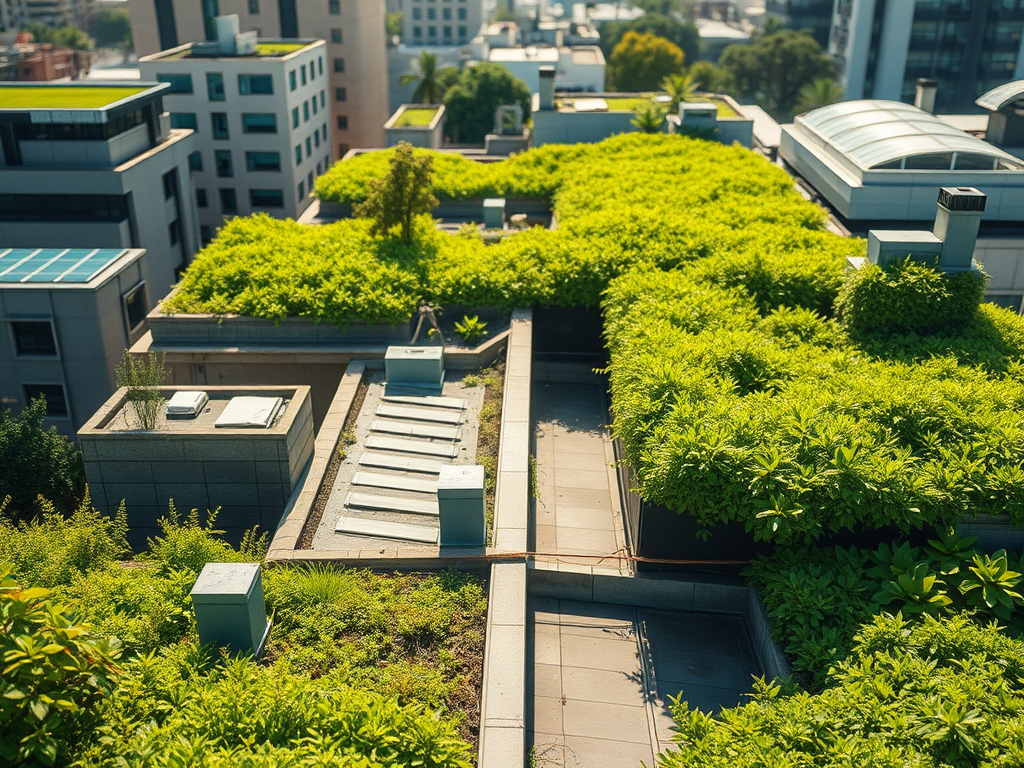
Green Roofs, also known as a living roof, is a roof of a building that is partially or fully covered with vegetation, soil, and a waterproofing layer. This eco-friendly roofing method helps to create green space in urban areas, promotes energy efficiency, and contributes to stormwater management. Green roofs come in two main types: extensive and intensive.
- Extensive green roofs are lightweight, requiring minimal maintenance and have a shallow soil layer that supports low-growing plants like grasses and mosses.
- Intensive green roofs, on the other hand, have deeper soil and can support a wider range of plants, including small shrubs and trees, though they require more maintenance and structural support.
Benefits of Green Roofs
- Energy Efficiency: Green roofs provide natural insulation, reducing the need for heating in winter and cooling in summer.
- Stormwater Management: The vegetation and soil absorb rainwater, decreasing the amount of runoff and helping to prevent flooding.
- Improved Air Quality: Plants on green roofs can help to filter pollutants from the air, making urban environments healthier.
- Biodiversity: Green roofs create habitats for birds, bees, and other beneficial organisms, enhancing local biodiversity.
- Urban Heat Island Effect: By cooling the surrounding air, green roofs can mitigate the heat typically generated by urban infrastructure.
Challenges of Green Roofs
Green roofs require a certain level of structural integrity to support the additional weight of soil and plants, which can lead to higher installation costs. Additionally, maintaining plant health, particularly in intensive green roofs, requires regular care.
Applications
Green roofs are increasingly used on residential buildings, commercial buildings, and even in urban planning projects to create more sustainable, livable cities. As awareness of climate change grows, green roofs offer a practical way to reduce urban environmental impact while providing aesthetic and practical benefits.


Leave a Reply